|
|
|
|
|
|
|
|
Race cars are proud creations. Solid, powerful, commanding respect and containing the love, hard work and admiration of their creators, drivers, officials and spectators. They are things of beauty and grace as they fly around the race track . Unfortunately, and like all of us, they are not immune from age and falling out of style.
The majority of old New England modified coupes and coaches from the 1950s and 1960s are gone now. Many were converted into Ford Pinto, Chevy Vega or AMC Gremlin modifieds. Others were cut up for scrap or stuck out in a field to rust into oblivion.
The early 1980s saw a movement begin to restore some of these old weekend warriors before the last ones rusted away forever. Organizations such as the New England Antique Racers club (NEAR) were formed around the country. Old race cars, such as Bill Schulz's 60 car were being given a second chance.
In 1989, James "Fitzy" Fitzgibbons (former car owner of the Jeff Reed #92 Hobby car at Norwood Arena) and the other vintage race enthusiasts at Fitzy's Goosebrook Garage in Norton, Massachusetts talked Bill Schulz into letting them rebuild his old #60 NASCAR Sportsman race car that ran at Norwood Arena in the mid 1960s. Fitzy planned to make an updated version of the 92 car.
In the 20+ years of sitting outside the car had acquired some serious rust and rot out on the sides and the frame. To really do this right the body of the car would need to be removed and a complete "frame up" restoration would be necessary.
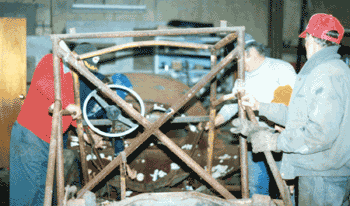
The process began with the removal of the body and stripping the car down to the frame and roll cage. Note that the roll cage is built of lighter materials and has far fewer bars than modern roll cages. For example, there is only one side bar with cross bracing (as required by NASCAR in 1965 - see 1965 rule book page 61). This car appears to fit the 1964 rules.
|
 |
|
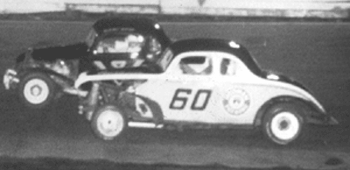
Bill Schulz in the 60 races Wild Bill Slater in the V8. Slater's V8 was seriously damaged in a wreck and replaced with a new car. The 60 was put out to pasture after a short race career when Schulz went to the 79 car. The 60 nearly rusted away until it was saved.
Photo courtesy the Bill Schulz Collection.
|
|
 |
|
|
 |
|
 |
 |
|
|
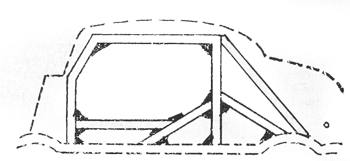
The roll cage above appears to be from the 1963 - 1964 seasons. Note the single bar that would have been just below the top of the door opening. This offered little protection from side impact. The front roof corners of the roll cage are also not braced very well and could fold back during a severe impact. Bill Schulz added the "X" support at his dads request. Since this is a historic car and the "on track" racing would be at exhibition level there was no need to modernize the roll cage.
|
|
|
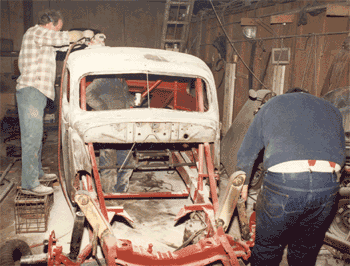
Once the rusted frame had been replaced, the frame and roll cage were painted and the body was mounted back on. Sheet metal was used to replace the rusted out body parts and the body was skim coated to blend in the sheet metal edges and fill in the rust pits to provide a smooth surface. This body smoothing technique is also used on Winston Cup Cars to cover body panel rivets and to help contour the body to meet template requirements.
|
|
 |
|
|
|
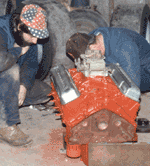
The engine was built and made "race ready" while the body and suspension work proceeded. Although the car would not compete in actual racing events it could participate in exhibition races with other vintage stock cars. Every so often, the guys at Goosebrook Garage fire up the engine just to experience the chest pounding rumble of a stock car engine again.
|
|
 |
|
Stu Robins sands the roof smooth while Turk works on replacing front end parts.
|
|
|
 |
|
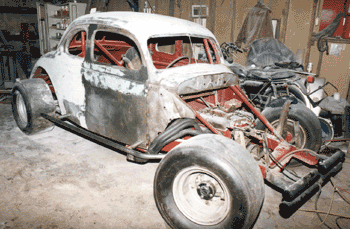
With the body on, engine set in to confirm placement, exhaust pipes attached and the chassis able to roll, the assembly of the car becomes a bit easier. Next comes the instillation of steering, brakes, floor pan, fire wall, radiator , wiring and the completion of the body work.
There is still a great deal of work to do on the body. It is easy to see the new steel panel in the right side door and the work in progress of blending body lines using body fillers, putties, reinforced fillers and seam sealers.
|
|
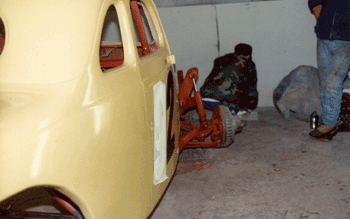
Once the body work is complete and the surface has been sanded smooth, the body is primed and painted. Usually at this stage other recently added components (rear end housing, nerf bars, etc.) are also painted.
The next step is decorating the car. Unlike the 1960s when most car numbers and sponsor listing were painted on, modern race car lettering is self adhering vinyl cut to form. The black numbers are in the process of being applied. The next step will be to apply white numbers that are cut slightly smaller to create a black boarder around the numbers. The Goosebrook sponsor logo will also be applied.
|
|
 |
|
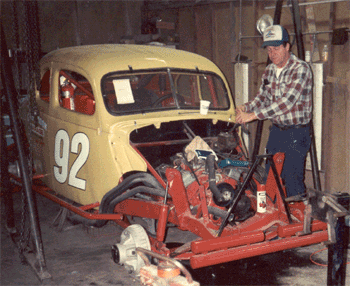
Now that the painting and decorating is done, the car goes through a final assembly stage. The motor is securely mounted, wired, hoses attached, radiator put in, windshield glass installed, gauges installed, and so on. The engine is tuned, brakes adjusted and it's out the door for the first test run and beauty pageant (display only antique race car show).
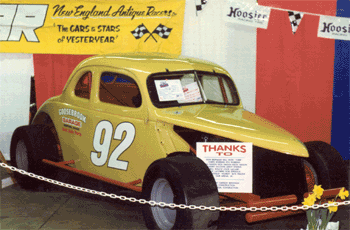
Below is the finished car on display at one of the antique race car shows and running in an exhibition race. To see these classics up close check your local speedway listing for special events or check the NEAR web site for a list of still (display only) and running (exhibition racing).
If you have an old coupe or coach in need of saving contact us and we will help find a home before it is gone.
|
|
 |
|
|
|
|
|
Elwin Nason works on finishing up the assembly.
|
|
|
 |
|
 |
|
|
The finished 92 car at a show and with veteran driver Bob Sprague behind the wheel during an exhibition race.
|
|
|
|
|
 |
|
|
|
|
Photo's Courtesy James "Fitzy" Fitzgibbons
Thanks to Goosebrook Garage in Norton, Massachusetts and Bill Schulz.
|
|
|
Copyright Norwood Arena.Com 2004 |
|
|
|
|
|
|
|
|
|
|
|
|
|
|
|
|
|
|
|
|
|
|
|
|